You walk outside and find your car covered in a thick layer of yellow pollen. It looks like an easy job—grab a cloth and wipe it away.
That’s exactly where the problem can begin.
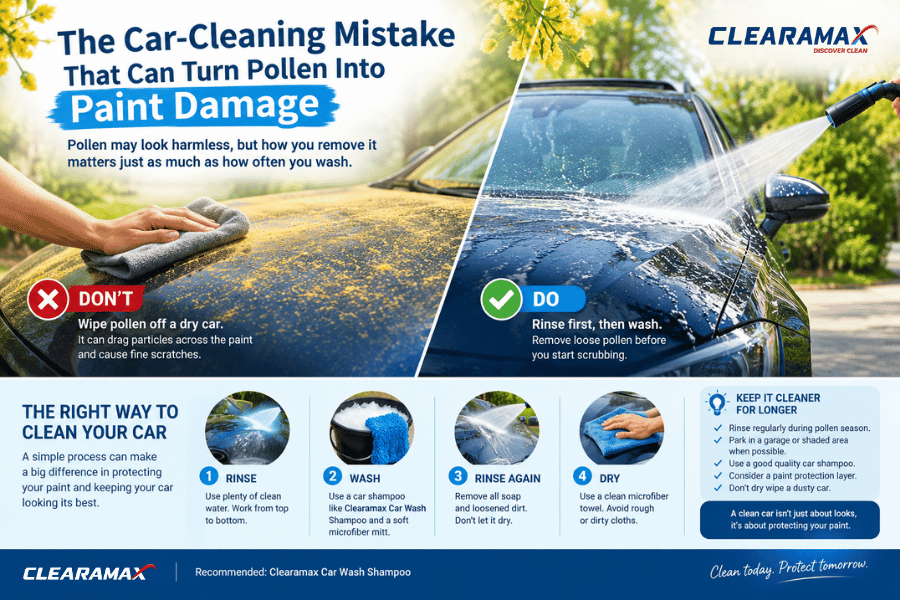
Pollen may look soft and harmless, but wiping a dusty, pollen-covered car while it is dry can drag tiny particles across the paint. Over time, this can contribute to fine scratches and swirl marks.
The good news? You don’t need to scrub harder. You need to remove the loose dirt before touching the paint.
Never Wipe Heavy Pollen From a Dry Car
When pollen and dust are sitting on your car, a dry cloth can push those particles across the paint rather than removing them.
Instead of immediately wiping the surface:
Rinse first. Wash second. Dry last.
This simple order can significantly reduce unnecessary friction against your car’s paint.
Step 1: Give the Car a Thorough Rinse
Start by rinsing the entire vehicle with plenty of clean water.
Begin at the roof and work your way downward. Pay special attention to:
- Roof
- Hood
- Trunk
- Windshield
- Side panels
- Rear of the vehicle
The goal is to remove as much loose pollen and dust as possible without rubbing the paint.
This first rinse is one of the most important steps of the entire wash.
Step 2: Use a Car Shampoo—Not Household Detergent
After rinsing away loose contamination, it’s time for the actual wash.
Use a shampoo specifically designed for vehicles and a clean, soft microfiber wash mitt.
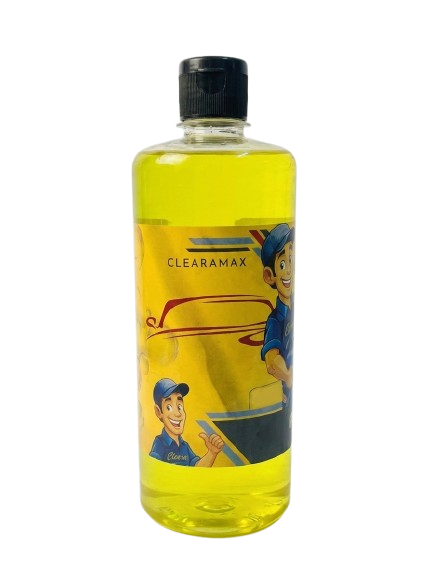
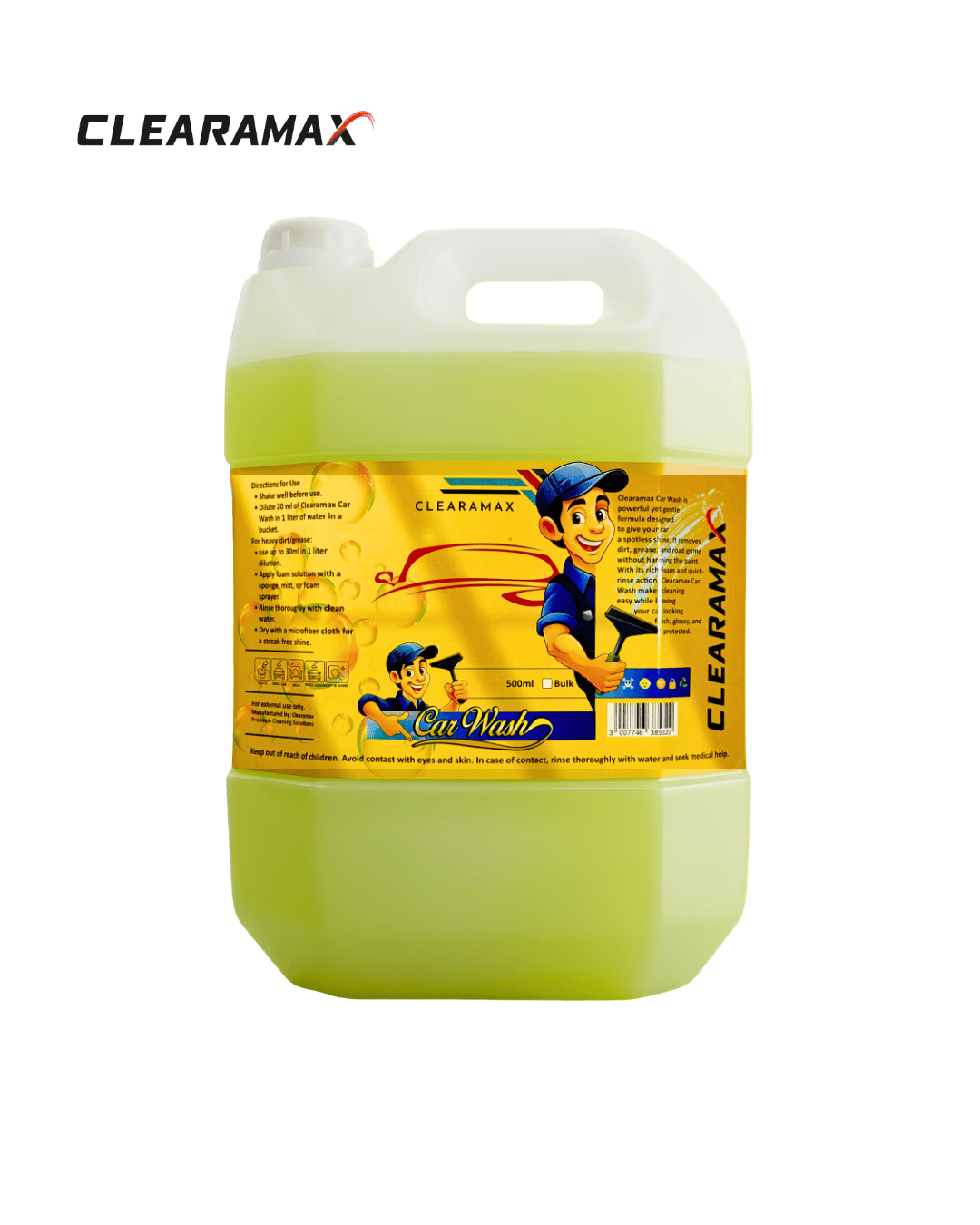
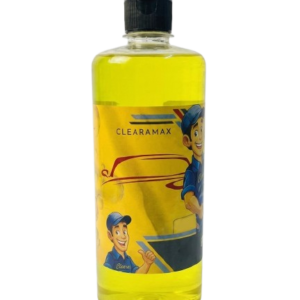
Clearamax Car Wash Shampoo can be used as part of this wash process to help lift everyday road dirt, dust, and grime from the vehicle’s exterior.
Avoid using household dishwashing detergents for regular car washing. They are not formulated specifically for maintaining automotive finishes and may affect existing wax or protective products.
Step 3: Wash Gently
Don’t attack the paint with force.
Work one section at a time and keep your wash mitt clean by rinsing it frequently.
A good approach is:
Roof → Glass → Hood & Trunk → Upper Panels → Lower Panels → Wheels
Keep the dirtiest areas for last so you don’t transfer heavy road grime onto cleaner parts of the vehicle.
Step 4: Rinse Again
Once you’ve washed the vehicle, rinse it thoroughly to remove the remaining shampoo and loosened dirt.
Don’t allow soap to dry on the surface, particularly in hot weather or direct sunlight.
Step 5: Dry With a Clean Microfiber Towel
Leaving your car to air-dry can result in water spots, especially if you have hard water.
Use a clean, soft microfiber drying towel and gently dry the vehicle.
Avoid using old towels, rough cloths, or anything that may contain trapped dirt.
What About Pollen After Rain?
Pollen can become more difficult to deal with when it mixes with moisture and remains on the vehicle for an extended period.
That’s another reason to avoid leaving heavy pollen buildup on your car for days.
If your vehicle is exposed to heavy pollen, a quick rinse followed by a proper wash can be much better than waiting until the buildup becomes stubborn.
How to Keep Your Car Cleaner During Pollen Season
You don’t necessarily need a full wash every time you notice a little dust.
During periods of heavy pollen:
- Rinse the car regularly.
- Avoid dry wiping dusty paint.
- Park under cover whenever possible.
- Keep a clean microfiber wash mitt available.
- Wash the vehicle when pollen buildup becomes noticeable.
- Consider using appropriate paint protection to make future cleaning easier.
The Golden Rule: Don’t Rub What You Can Rinse Away
The biggest lesson is simple:
Don’t start scrubbing a dirty car. Start by removing the loose dirt.
A few extra minutes spent rinsing before washing can help reduce the amount of abrasive material being dragged across your vehicle’s paint.
With the right washing technique and a quality car shampoo such as Clearamax Car Wash Shampoo, keeping your car clean doesn’t have to mean putting unnecessary stress on the finish.
Clearamax Tip
Rinse → Wash → Rinse → Dry
That’s a simple routine to remember whenever your car is covered in pollen, dust, or everyday road grime.